Joint Statement: Protection of Iranian Civilians and the Imperative of Compliance with International Humanitarian Law

The undersigned non-governmental organizations express their deep and growing concern regarding the situation of civilians in Iran following the military attacks by the US and Israel on Iran that began on 28 February 2026 and continued for over a month. These developments, now compounded by ongoing maritime restrictions and an unstable security environment, underscore the persistent risk of renewed escalation. The continuation of these conditions significantly heightens the urgency for immediate international action to prevent the expansion of a humanitarian catastrophe.
The protection of civilians is not only a binding legal obligation under the four Geneva Conventions of 1949 and their Additional Protocols of 1977, but also represents the minimum moral standard for safeguarding human dignity in times of armed conflict. Core principles such as distinction, proportionality, and precaution in attack form the foundation of international humanitarian law. Violations of these principles, particularly when they affect children, women, and other civilians, may constitute grave breaches and potentially war crimes.
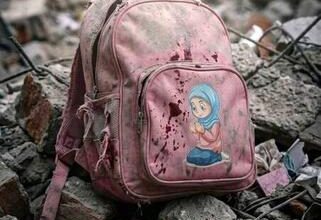
According to official statistics released by governmental authorities of the Islamic Republic of Iran, including the Ministry of Health, an attack on the “Shajareh Tayyebeh” primary school in the city of Minab (Hormozgan Province) during school hours resulted in the deaths of at least 165 students and teachers. This incident is not only a profound human tragedy, but also a painful symbol of the vulnerability of children in armed conflict, children who, instead of the safety of a classroom, were confronted with the deadly reality of war.
Furthermore, official reports indicate that at least 1,700 civilians have been killed across the country by US and Israeli strikes, the majority as a result of aerial bombardments. Thousands more have been injured, and a significant number of families have been forced to flee their homes. Alongside these human losses, critical national infrastructure has suffered widespread damage. According to data released by relevant authorities, more than 45 hospitals and medical facilities have been fully or partially destroyed or rendered inoperable; at least 1200 schools and educational institutions have been severely damaged or destroyed; and over 230 clinics and local health centers have sustained damage. These figures reflect not merely statistics, but the progressive collapse of life-saving systems and the deprivation of thousands of people from access to essential healthcare and education.
Under Articles 51 and 52 of Additional Protocol I to the Geneva Conventions, parties to a conflict are obligated at all times to distinguish between civilian and military objectives and to refrain from attacking civilian objects, including schools, hospitals, and public infrastructure. Attacks on educational and medical facilities constitute clear violations of these obligations and may amount to serious breaches of international humanitarian law. In this regard, experts from the United Nations have called for prompt, independent, and impartial investigations.
In addition to the human toll, the destruction of industrial facilities, refineries, and energy infrastructure has caused extensive and, in some cases, irreversible environmental damage. The release of toxic substances, contamination of water and soil, and increased air pollution not only threaten the health of present populations but also endanger the environmental future of the region. Such actions may constitute violations of international obligations related to environmental protection during armed conflict, as well as the fundamental human right to a healthy environment.
Reports and statements issued by international NGOs, including Amnesty International and Human Rights Watch, have also emphasized the necessity of full compliance with international law, effective investigations, and ensuring accountability for those responsible.
Moreover, the continuation of maritime and trade restrictions by the US, which have effectively disrupted civilians’ access to medicine, medical equipment, food, and other essential goods, raises serious concerns under international humanitarian law. Such measures, if they result in widespread harm to civilian populations, may be inconsistent with the prohibition on collective punishment.
Requests and Recommendations
The undersigned NGOs and institutions, emphasizing the urgency of the situation, call upon relevant international authorities to:
- Establish, without delay, an independent international fact-finding mechanism under the supervision of the United Nations to investigate all alleged violations of international humanitarian law by the US and Israel, particularly their attacks against civilians and critical infrastructure;
- Conduct a comprehensive environmental damage assessment with the participation of the United Nations Environment Programme and ensure that responsible parties provide reparations and undertake remediation efforts;
- Guarantee immediate and unimpeded humanitarian access to all affected areas;
- Strengthen international monitoring and reporting mechanisms to the UN Security Council and the Human Rights Council;
- Ensure the immediate and sustained cessation of attacks against civilian infrastructure and full compliance with international humanitarian law;
- Lift maritime restrictions by the US and facilitate the free flow of humanitarian goods to prevent further suffering of civilians.
- Compensation shall be provided by the aggressors, the US and Israel, to war victims, allowing them to recover and resume normal life.
In conclusion, we call upon all governments, international organizations, civil society actors, and conscientious individuals around the world to endorse this statement. Today, the protection of civilians is not merely a political position; it is a test of the international community’s commitment to the fundamental principles of humanity. If these principles are disregarded, it is not only one nation that suffers, but the conscience of humanity as a whole.
1) Children’s Rights to Health Card
2) Center for Peache and Reconciliation Centre Studies
3) Human Rights and Peace Organization
4) Geneva Institute for Hard Peace Studies
5) Bahjat Al Fuad Center for Psychological and Medical Rehabilitation for Torture Victims
6) International Movement for a Just World (JUST)
7) Khiam Rehabilitation Center for Victims of Tortur