
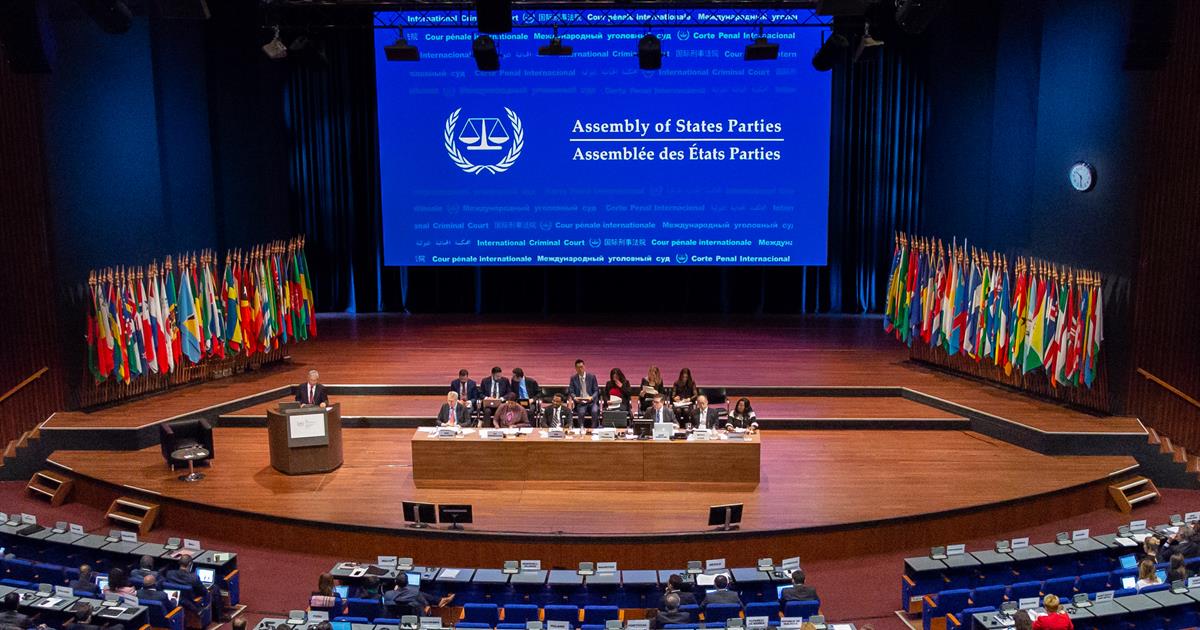
The twenty-fourth session of the Assembly of States Parties (ASP-24) to the Rome Statute of the International Criminal Court convened on 3 December 2025, marking the first dedicated public discussion on non-cooperation. The meeting examined practical measures to prevent non-cooperation by states, focusing on Article 97 and the advisory mechanisms of the Rome Statute.
Key Points and highlights of this event are as follows:
- The twenty-fourth session of the Assembly of States Parties (ASP-24) to the Rome Statute took place on 3 December 2025 and featured the first dedicated public discussion on “non-cooperation.” The session addressed a widespread challenge: states’ obligations to cooperate with the Court, particularly during inter-sessional periods.
- The meeting focused specifically on Article 97 of the Rome Statute and the advisory mechanisms it envisages. Through institutional dialogue and experience-sharing among diverse actors, the session aimed to propose practical measures to prevent non-cooperation.
- The program consisted of a specialized panel followed by statements from government and relevant entity representatives, each presenting their views within a set timeframe.
- Emphasis was placed on the need for immediate and effective consultation between member states and the Court when operational obstacles arise in response to cooperation requests (including arrest and surrender requests). Speakers also highlighted the role of the Assembly’s approved procedures and non-cooperation tools as complementary diplomatic instruments to prevent the escalation of non-cooperation situations.
- The session underscored that preventing non-cooperation requires sustained political commitment from states, legal transparency, and active use of the Rome Statute advisory mechanisms—foundational for the enhanced efficiency and authority of the international criminal justice system.
Panelists:
- Representative of the Registry, Judicial Cooperation Section
- Representative of the Office of the Prosecutor, Cooperation Section
- Representative of civil society
- Representative of States Parties and ad hoc country focal points
